

Signed in as:
filler@godaddy.com

Signing a publishing contract is a major accomplishment. Take a moment, celebrate, tell your friends, dramatically stare out a window like a successful author in a movie—and then remember that readers still need to find out your book exists.
Our role is to help turn your completed manuscript into a professionally published and printed book. We handle the publishing and production side of the process, but we do not operate full-scale marketing campaigns for every title. That means authors must be active participants in promoting their work.
A publisher can produce your book. We cannot personally knock on every door in America and ask people to buy it. Apparently, there are laws against that.
The authors who give their books the best chance of success are the ones who consistently talk about them, build relationships with readers, create useful content, and remain involved long after publication day.

Do not wait until the book is released to suddenly announce that you have written one.
Begin introducing yourself as an author while the book is still being edited, designed, and prepared for publication. Share appropriate behind-the-scenes updates such as:
You do not need a million followers. A small, interested audience is far more valuable than a large group of people who followed you because of one video involving a dancing raccoon.

You do not need to be everywhere. Select the platforms where your likely readers already spend time.
Depending on your book, this may include:
A business or leadership author may benefit from LinkedIn. A picture-book author may find parents, teachers, and librarians through Facebook, Instagram, and Pinterest. A fantasy author may connect with readers through TikTok, YouTube, Goodreads, and genre communities.
Focus on two or three platforms you can use consistently instead of opening eight accounts and abandoning seven of them before lunch.

Repeatedly posting a photograph of your book with the words “Available now” is not a complete marketing strategy. It is a digital version of standing in a parking lot holding a sign.
Give people reasons to follow you.
Useful content may include:
The goal is to build interest, not to turn every post into a hostage negotiation involving a purchase link.

“Everyone” is not a target audience.
Think carefully about the readers most likely to connect with your book. Consider:
For a children’s book, your customer is usually not the child carrying the allowance money. Your marketing may need to reach parents, grandparents, teachers, librarians, schools, daycare centers, gift shops, and organizations that serve families.
Knowing your audience helps you decide where to promote, what to post, and who to contact.

An author website gives readers, reviewers, bookstores, schools, and media contacts one reliable place to learn about you and your work.
Your site should include:
Keep it clean and easy to navigate. Your website should not look like it was designed during a power outage in 1997.

Social-media platforms can change their rules, reduce your reach, suspend accounts, or disappear into the internet attic without warning.
An email list gives you a direct way to communicate with interested readers.
Invite people to join your list through your website, events, social pages, and printed materials. Give subscribers something worthwhile, such as:
Do not buy email lists. Nothing says “future loyal reader” quite like an unsolicited message from someone they have never heard of.

Reviews help potential readers decide whether a book is worth their time and money.
Ask readers to leave honest reviews on the websites where the book is sold or discussed. You can include a polite review request in:
Never demand a positive review. Ask for an honest one.
Do not write fake reviews, ask relatives to create fifteen suspicious new accounts, or trade misleading reviews with other authors. Readers are smarter than people often assume, and retail platforms generally do not enjoy review shenanigans.

Before release, consider providing early copies to a small group of readers who are interested in your genre or subject.
Advance readers may include:
They may be willing to provide an honest review, share the book, recommend it, or help create early awareness.
Make sure everyone understands that receiving a complimentary copy does not require a positive review.

Independent bookstores may consider stocking local authors, hosting signings, or offering books through consignment arrangements.
When contacting a bookstore, be professional and prepared. Include:
Do not walk into a busy bookstore on Saturday afternoon, place a box of books on the counter, and announce that you are there to make everyone rich.
Contact the appropriate buyer or events coordinator first.

Libraries support authors, readers, families, and local communities. Depending on the book, you may be able to arrange:
Provide libraries with complete ordering information and explain why the book may interest their patrons.
For children’s books, make sure your presentation is engaging, age-appropriate, and not simply thirty minutes of asking children whether their parents brought wallets.

Authors of children’s books, educational books, history books, inspirational titles, and certain nonfiction works may find opportunities through:
Offer something useful in addition to selling books. This might include a reading, writing exercise, classroom discussion, demonstration, presentation, or activity sheet.
Always follow the organization’s rules regarding visitor approval, content, pricing, and communication with students.

In-person appearances can help readers connect with both the author and the book.
Look for opportunities such as:
Choose events that match your audience. A technical leadership book may not sell particularly well beside homemade soap at a medieval goat festival. Then again, publishing is strange, so never say never.

Authors should be prepared to discuss their book wherever appropriate.
Consider keeping the following available:
Practice explaining the book in one or two sentences. This is sometimes called an elevator pitch, although cornering strangers inside elevators is generally discouraged.
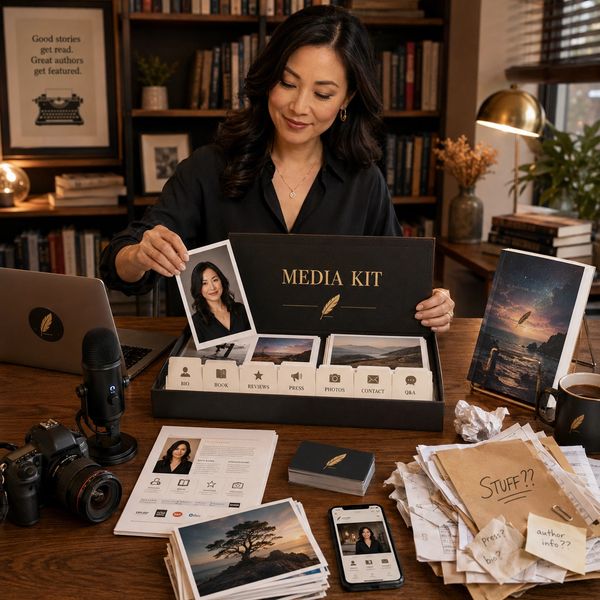
A basic author media kit makes it easier for reviewers, journalists, event organizers, bookstores, schools, and podcasters to feature you.
Your media kit may include:
Keep these materials accurate, organized, and easy to download.

Look for media outlets that cover your subject, genre, community, or intended readers.
Potential contacts include:
Send a personalized message explaining why your book may interest their audience.
Do not send a generic email beginning with “Dear Influencer” to 800 people and then wonder why the literary world has failed to recognize your genius.

Other authors are not automatically your competition. Readers routinely purchase more than one book. Some even own shelves.
Consider working with other authors on:
Choose collaborators whose books, audiences, and professional standards complement your own.

Paid advertising can help, but it is not magic.
Before spending money, make sure you understand:
Begin with a modest budget, test different approaches, and track results.
Throwing $500 at an advertisement without a plan is not marketing. It is simply a creative way to turn $500 into a graph.

A book may connect naturally with businesses, nonprofits, clubs, museums, community organizations, professional groups, or special-interest associations.
For example:
Look beyond traditional bookstores. Readers have been known to leave their homes occasionally.

Your book launch does not need fireworks, a marching band, and a celebrity who mispronounces your title. It does need planning.
A release plan may include:
Spread promotional activity over several weeks rather than trying to do everything on publication day.
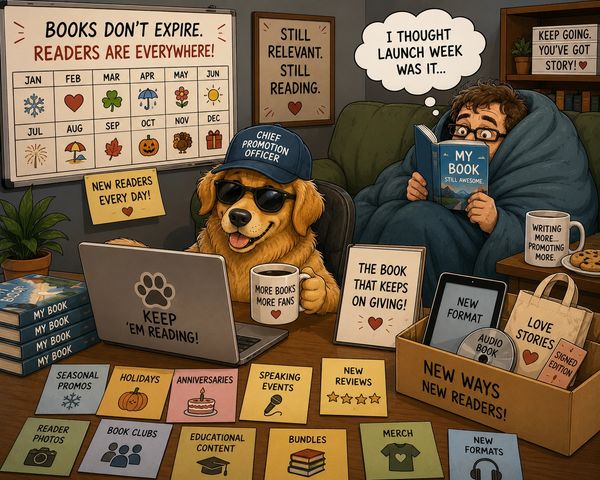
Many authors promote heavily for one week and then vanish as though the book entered witness protection.
Books do not expire after release day.
Continue creating opportunities through:
A book can continue finding readers for years, but only when people continue hearing about it.
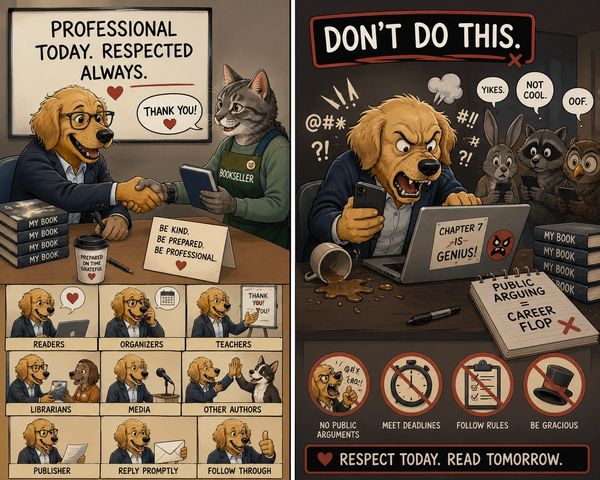
Every interaction can affect your reputation.
Respond professionally to:
Meet deadlines. Provide requested information. Show up prepared. Follow event rules. Be gracious when someone helps you.
Do not argue publicly with reviewers, including the one who clearly misunderstood the brilliance of Chapter Seven.

Book promotion is usually the result of steady effort rather than one enormous breakthrough.
Some posts will receive little attention. Some events will be slow. Some emails will go unanswered. This is normal.
Continue learning, improving, and trying new approaches. Pay attention to what produces actual reader interest rather than chasing every new trend.
Consistency beats occasional panic.
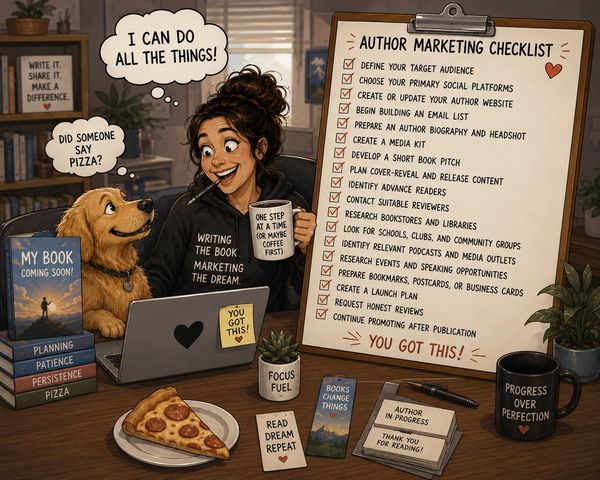
Once your publishing agreement is signed, begin working through the following:
A publishing contract opens the door, but it does not carry the author through it, seat them at a table, hand them a crowd, and sell the books while they sip coffee.
We will do our part to publish and produce a professional book. Authors must do their part by building awareness, connecting with readers, and consistently promoting their work.
Nobody knows your book better than you. Nobody can speak about your reason for writing it with the same authenticity, enthusiasm, or personal connection.
Be proud of the book. Talk about it. Share it. Show up for it.
You worked hard to become a published author. Now make sure people know one exists.
